
June - August 2026 Water Data
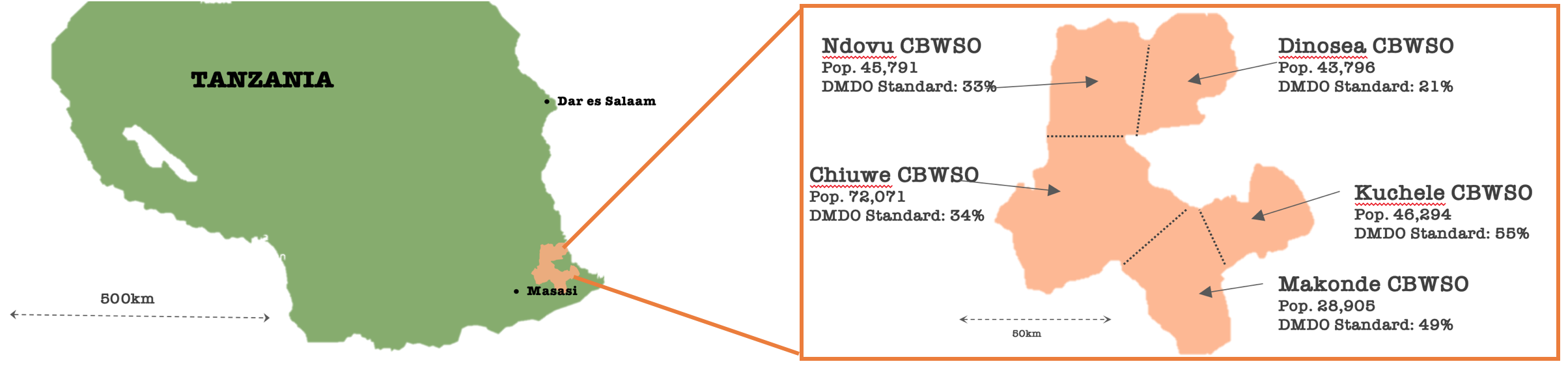
Key Insights:
There is increasing consumption of water from June (32,398,006 Ltrs), July (35,190,544 Ltrs), to August (44,155,230 Ltrs) owing to the dry season.
The majority of water systems in Lindi District are not digitised, so non revenue water (revenue loss) remains a main challenge.
Makonde CBWSO, after DMDO investment in prepaid meters (digitisation), shows minimal revenue loss.
2. Lindi District Revenue Loss Data:
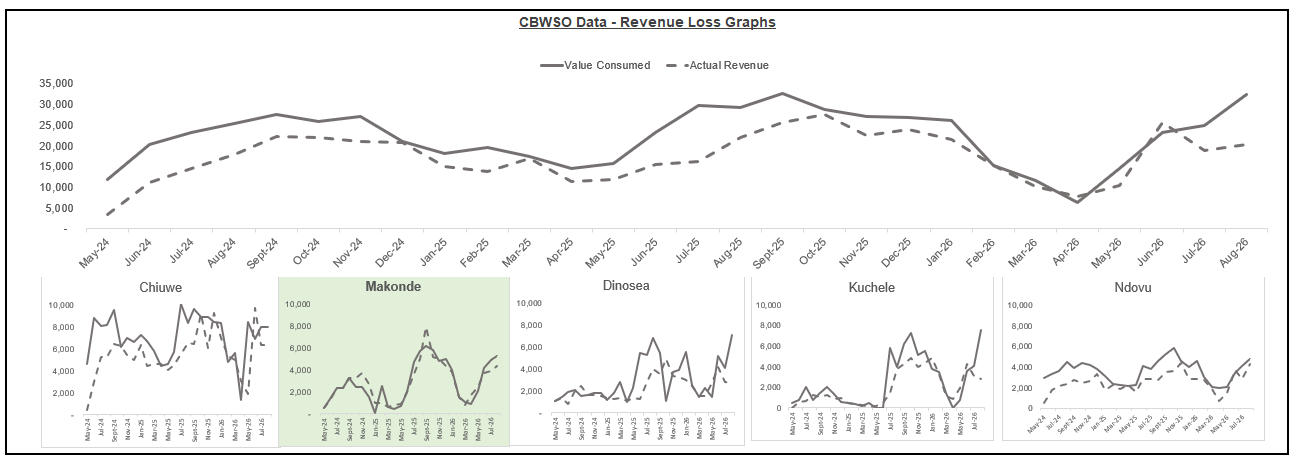
Lindi District 5 CBWSO revenue collection trends showing the differences in water value consumed vs the actual revenue collections
3. CBWSO Revenue vs Operating Expenditure:
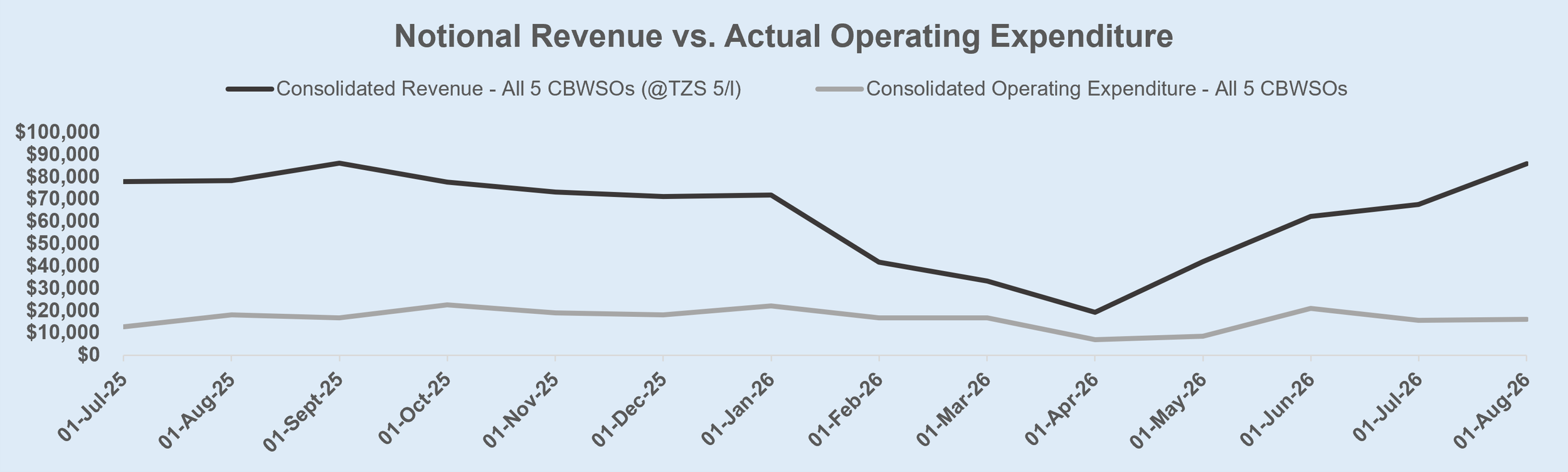
The graph shows there is substantial balance as consolidated CBWSO current total operating costs is lower to revenue collected.
This aspect remains the key to sustainability and investment opportunities, as the investments that reduces operating costs increasing the balance for debt service and reinvestments. The current collections shows the increasing revenue and over the operating expenses.
4.CBWSO Revenue loss trends:

The red line shows the trends of revenue loss which increases when actual revenue goes down and the loss goes down when actual revenue rises up.
Among the areas of potential investment is on improving revenue collections, which the DMDO has proven that with prepaid water meters and digitized water systems provides about 90%-100% revenue collection.
Also improving the water system from water source, water storage, distribution pipelines needs more increasing customer base who are directly collected to water systems to reach more customers.
5. DMDO Footprint Data
The DMDO in partnership from World Vision Tanzania with Funds from The Grille Foundation, has invested in water systems to DMDO standards that is “Basic access to clean, safe, and reliable water services delivered through digitized infrastructure.”
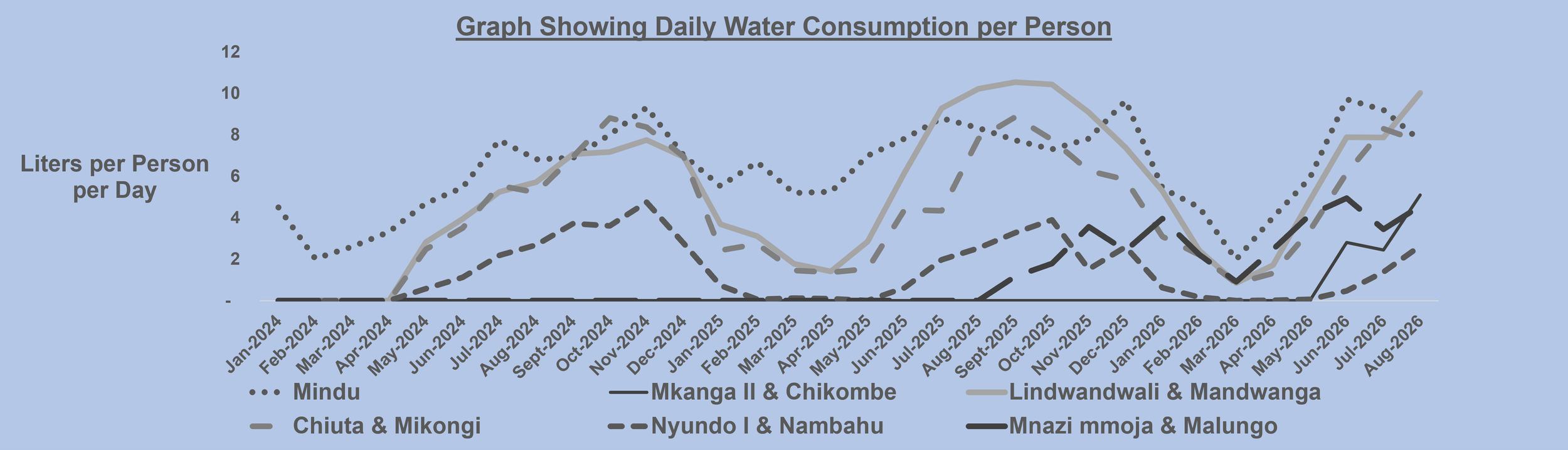
DMDO footprints where majority are accessing water from public taps using water smartcards with about 24% of the population being registered customers. From June to August, there is increase in water consumption where the future focus is on household connections where households using smartcards from public water points has lower water consumption compared to customers with household water connections.
6. Household Connections Investment
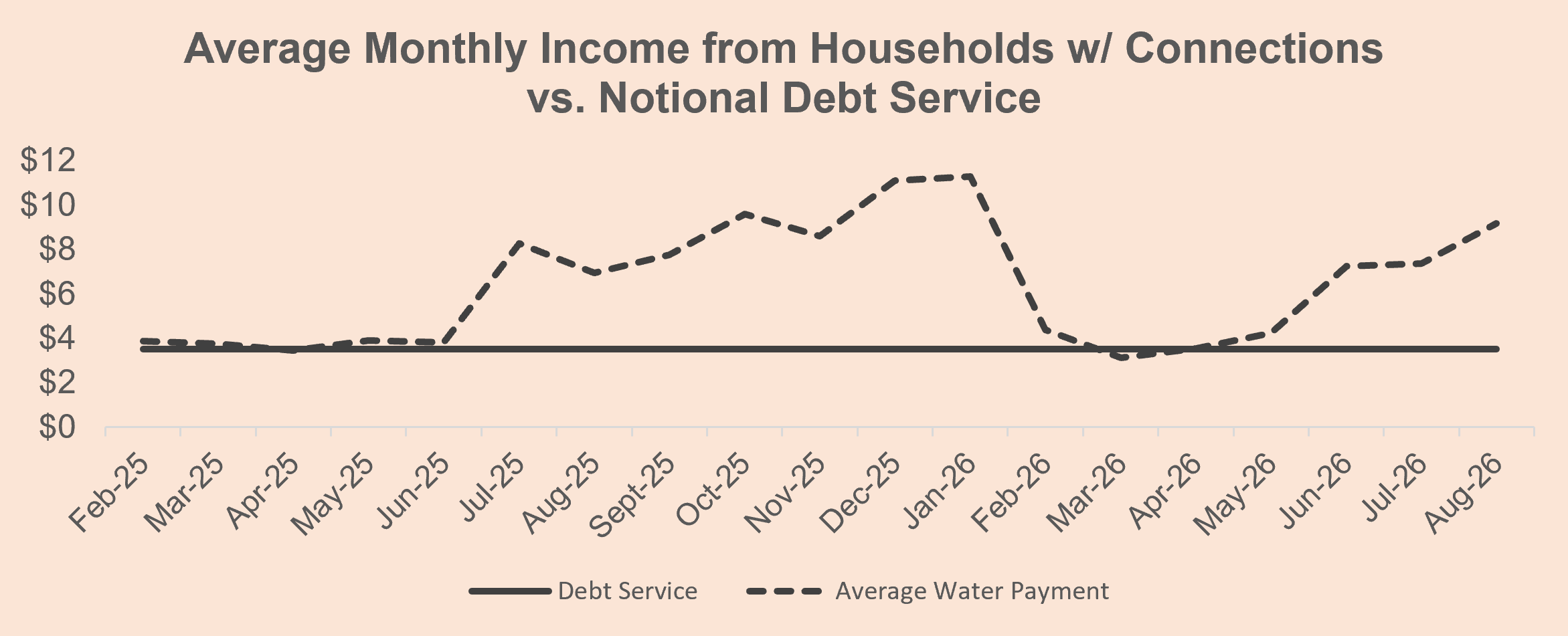
The graph shows, the current household connection revenue trends provides the possibility of covering the debt service which if potential for attracting private capital for connecting more homes with water on premise as costumers with water in their homes shows high consumption compared to customers assessing water from from public distribution points
7. Household Connection Consumption Data
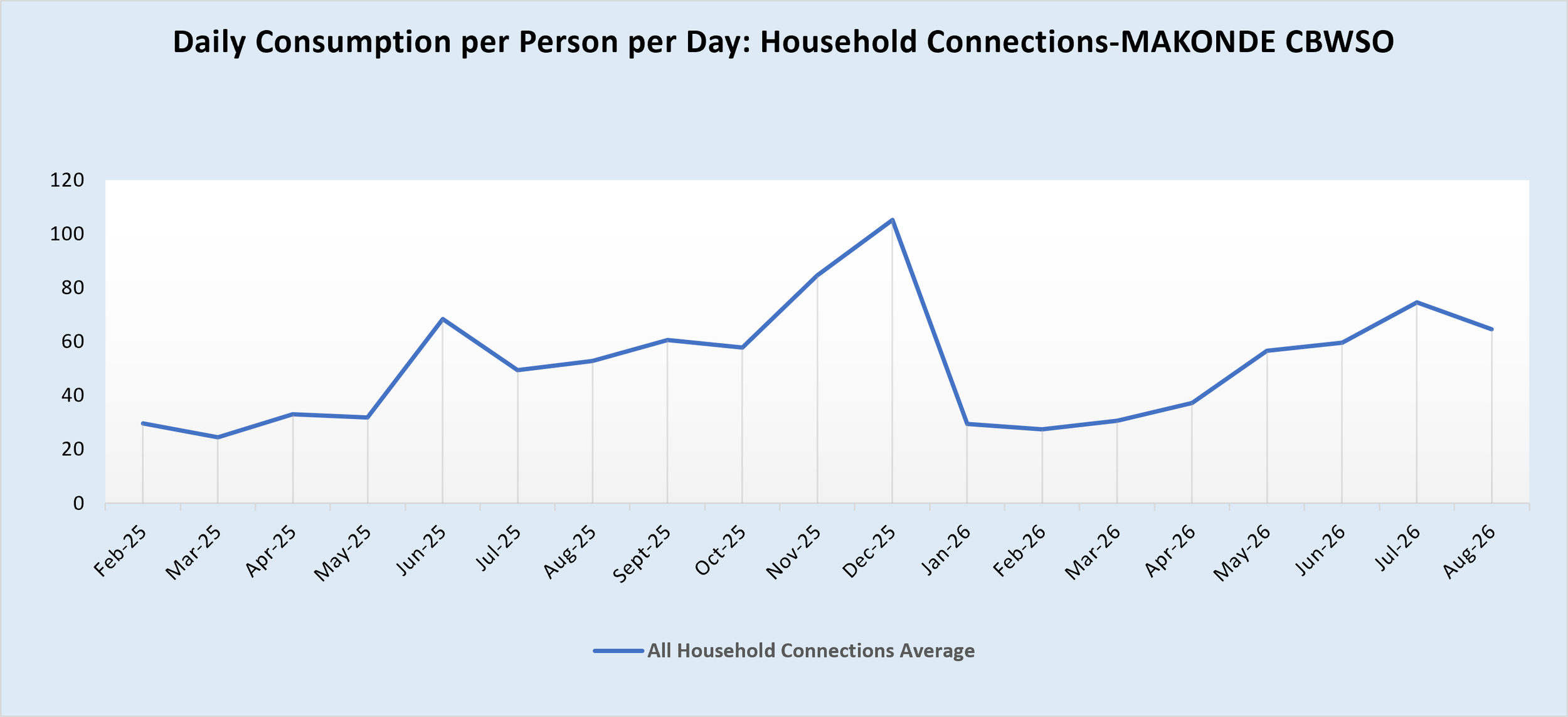
Majority customers with Household water connections shows high consumption from average of 30liters at low season to 60liters at high season per day per person where public distribution points counts about the average of 7 liters per day per person.
8. Our Impact
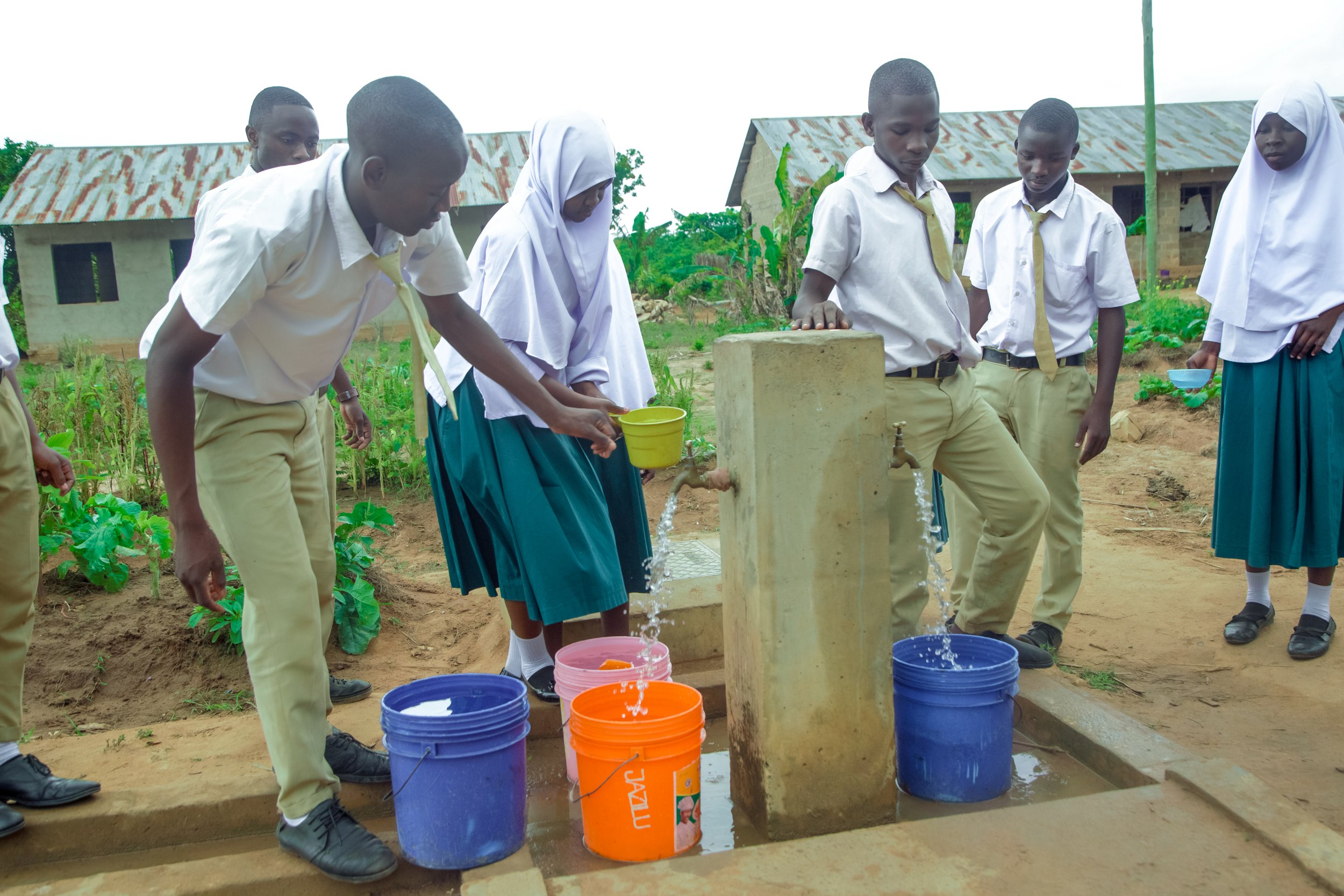
Students at Chiuta Sekondary school accessing water in the school premise.
The impact of improving access to clean and safe water in communities, schools, health facilities and household with improvement in sanitation and hygiene facilities touches the lives of all community members especially the marginalized groups who are highly affected by water scarcity stress. Students have been comfortable at schools effectively utilizing school hours for learning where reliable access to water has provided opportunities for household members to effectively engage in their productive activities due to DMDO and World Vision WASH+ intervention with funds from The Grille Foundation.
9. DMDOs current focus areas:
With Funds from the Grille Foundation, the DMDO as been able to see the opportunity of private capital investments in WASH sector,
Therefore from September to December, we are engaging with the government to secure the service agreement between the government through RUWASA (CBWSO) and the DMDO. This will allow the DMDO to generate surplus income (after operating expenses) that will allow the DMDO to offer a return to investors in water supply infrastructure.
Any questions or feedback, please contact me, Victor William, at victor80.vw@gmail.com.
